Alkali-Activated Calcined Clay
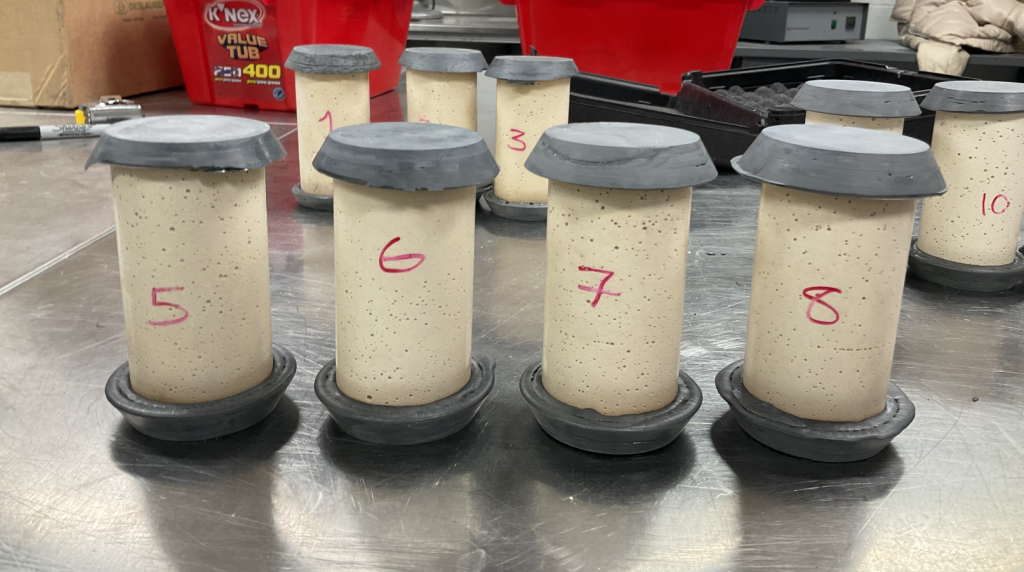
Due to the abundant availability of kaolin clay around the world, alkali-activated calcined kaolin clay (AACC) has the potential to significantly lower CO2 emissions associated with the cement industry (reduction of 65% or more). Calcined kaolin clay is manufactured by calcining (i.e., heating) kaolin clay at 700-900°C. Worldwide reserves of kaolin clay are thought to be greater than that of limestone, making calcined clay well-suited for use by the concrete industry.
We have a number of research projects ongoing in the group focused on AACC, and recent published work includes:
- A review article on AACC for sustainable construction
- Tailoring the permeability of alkali-activated metakaolin (AAMK) using alkali earth (hydr)oxide
- Mechanistic insight into the role of alkali earth hydroxide as an means of lowering AAMK emissions
Reactivity of Supplementary Cementitious Materials
In recent years we performed a range of investigations on predicting the reactivity of supplementary cementitious materials (SCMs). SCMs are materials such as coal-derived fly ash, blast furnace slag, and metakaolin, that can supplement certain levels of Portland cement powder to improve concrete’s long-term durability, lower its cost, and/or reduce CO2 emissions. In a series of journal articles on calcium aluminosilicate glasses we have developed composition-structure-reactivity relationships from our density functional theory modeling and force-field molecular dynamics simulation results combined with key experimental data from the literature:
- Density functional modeling and total scattering analysis of the atomic structure of a quaternary CaO-MgO-Al2O3-SiO2 (CMAS) glass: Uncovering the local environment of calcium and magnesium
- Predicting CaO-(MgO)-Al2O3-SiO2 glass reactivity in alkaline environments from force field molecular dynamics simulations
- Development of physics-based compositional parameters for predicting the reactivity of amorphous aluminosilicates in alkaline environments
Ca-based Layered Double Hydroxides
We have been investigating Ca-based layered double hydroxides (LDHs) as CO2 capture materials. This involves:
- Determination of a simple approach to synthesize phase-pure Ca-based LDHs
- Use of Ca-based LDHs for CO2 capture and Joule heating regeneration
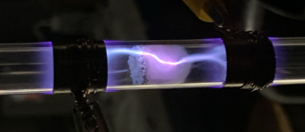
- Ongoing work using non-equilibrium plasmas for material regeneration (i.e., release of CO2)